

Comparisons
Adobe Premiere Alternatives: Best AI Video Editors in 2026
Premiere Pro is overkill and underpowered for AI workflows. Here are the best AI-native and traditional NLE alternatives to Adobe Premiere in 2026.
Adobe Premiere Pro has been the industry-standard NLE for two decades. In 2026 it is in an awkward position: too expensive and too heavyweight for the creators who have moved to AI-native generation, and too slow on AI features for the post houses that need them. Adobe shipped Generative Extend, Object Mask, and the Firefly video model in late 2025, but the model quality lags VEO 3.1, Sora 2, and Kling 3.0 by a meaningful margin. The Creative Cloud subscription stack is also painful: at 60-80 dollars a month for the suite, you are paying for Photoshop, Illustrator, and After Effects whether you use them or not.
This guide is for editors and producers who use Premiere today and want to know what is actually competitive in 2026. The honest answer is split: keep a real NLE for finishing, but move the generation, transcription, and many of the assistive AI tasks to better dedicated tools.
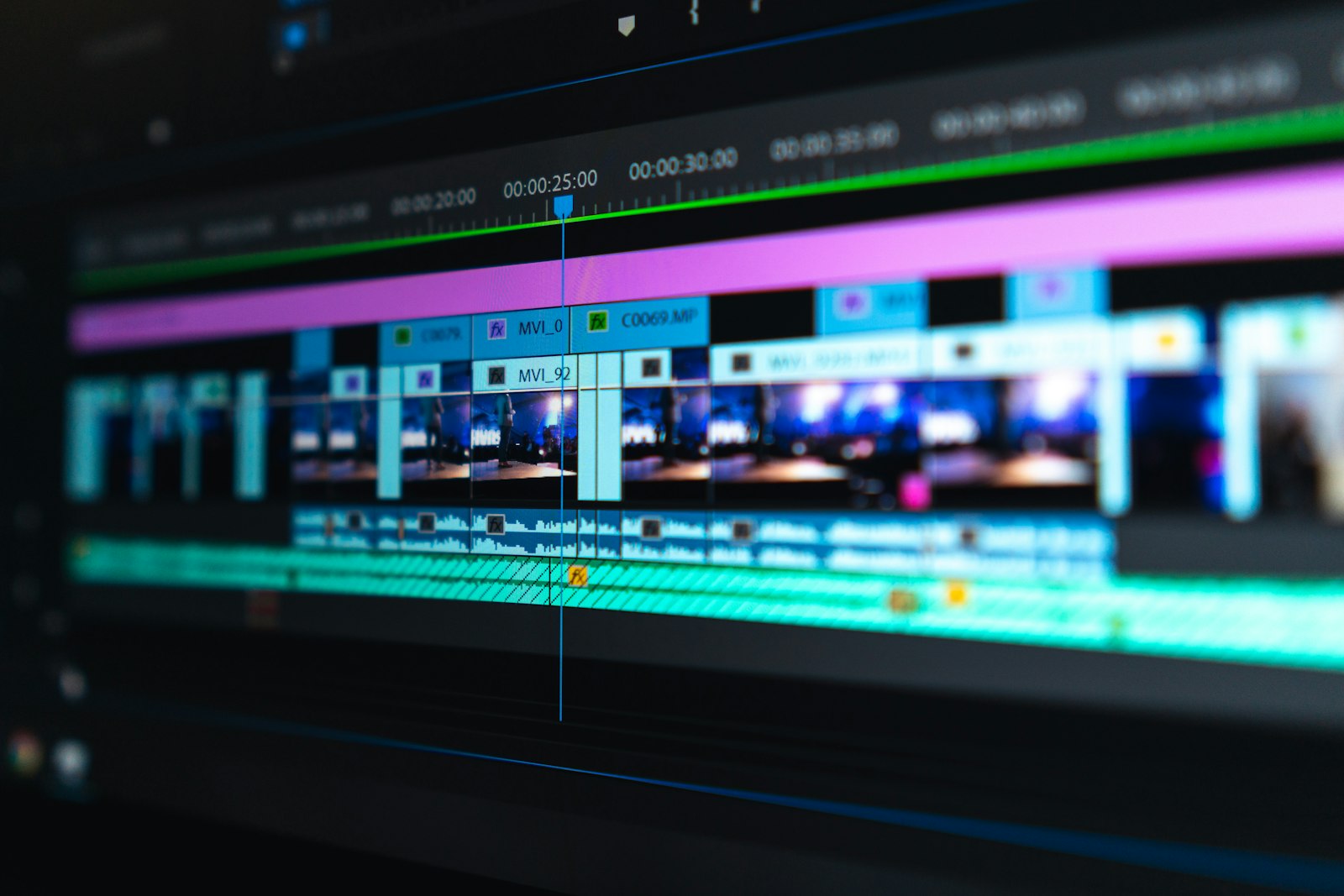
Section 1: What Premiere Pro is great at
Premiere is a mature, frame-accurate NLE with deep integration into the Adobe ecosystem. The timeline is responsive at scale, the trimming tools are precise, and the multicam editing for podcasts and interviews is best-in-class. Dynamic Link with After Effects remains the cleanest motion-graphics pipeline in any editor, and Lumetri color is good enough for most professional work without exporting to DaVinci Resolve.
For long-form documentary, narrative, and corporate work where you have a lot of source footage and need to assemble it carefully, Premiere is still a defensible choice. The transcription-based editing added in the 2024 update is genuinely useful, the speech-to-text is competitive, and the Auto Reframe for vertical exports works.
If you have a Premiere-trained editor on staff, the muscle memory and project compatibility are worth something. Switching costs are real. None of this article is suggesting you abandon Premiere on Tuesday.
Section 2: Where it falls short in 2026
Premiere's AI story is the problem. Firefly Video is a solid model for inpainting and object removal, but as a text-to-video or image-to-video generator it is well behind VEO 3.1, Sora 2, Kling 3.0, and Wan 2.7. Generative Extend (which fills in additional frames at the head or tail of a clip) works but is limited to 2 seconds and frequently shows artifacts. There is no native lipsync, no voice cloning, and no real generative b-roll workflow.
Pricing is the second problem. Creative Cloud All Apps is around 80 dollars a month per user in 2026, with the single-app Premiere plan around 30 dollars. For a freelance editor who only uses Premiere, that is fine. For anyone running a content team where most editors need only Premiere plus an AI generation layer, paying for the full suite is wasteful. Adobe's pricing has not adapted to a world where generation tools eat a meaningful share of the post-production workflow.
Performance is also a long-running complaint. Premiere on Apple Silicon is much better than it was, but on Windows the rendering and export performance still lags DaVinci Resolve on the same hardware. For 4K and 8K work, the difference is hours per week.
The collaboration story is weaker than Adobe markets. Team Projects work but are slow, version conflicts are common, and the cloud sync is fragile compared to what Frame.io (also Adobe) offers as a separate product. Many teams have moved to Frame.io plus DaVinci or Frame.io plus a lighter editor.
Section 3: Direct NLE alternatives
DaVinci Resolve
The strongest direct replacement for Premiere in 2026. Resolve is a full NLE plus best-in-class color grading (Resolve was originally a color tool), Fairlight audio, and Fusion compositing. The free version is feature-complete enough that many professional editors have switched without ever upgrading to Studio. Studio is a one-time 295 dollar purchase, not a subscription, which over three years saves about 2500 dollars compared to Creative Cloud.
Best for editors who want professional-grade tools without the Adobe tax, and for colorists who want the best grading workflow in the industry. Weakness: the AI generation features in Resolve 19 are limited, so most teams pair it with a dedicated AI tool like Versely for the generation layer and use Resolve for finishing.
Final Cut Pro
Best for Mac-only editors who want a polished, performant NLE with strong magnetic-timeline editing. Final Cut is a one-time 300 dollar purchase, runs beautifully on Apple Silicon, and the 2026 update added Apple Intelligence transcription and basic generative tools. Weakness: Mac-only, which rules it out for any cross-platform team.
CapCut Pro for Desktop
Best for short-form social editors stepping up from the mobile app. CapCut Pro for desktop is around 12 dollars a month and covers the basic NLE feature set with the same template library and auto-caption tools as the mobile version. Weakness: not a serious tool for long-form or color-critical work, and the ByteDance ownership question continues to flag for enterprise clients. See our CapCut alternatives breakdown for the deeper view.
Section 4: AI-native generation alternatives
Versely
The bundled multi-model recommendation. If your Premiere workflow includes a lot of stock footage purchases, b-roll filming, voiceover hire, or music licensing, Versely replaces all of those with generation. Routes to VEO 3.1, Sora 2, Kling 3.0, Wan 2.7, Hailuo, PixVerse V6, ElevenLabs v3, Suno v5.5, Lyria, and Inworld TTS-2 (released May 5, 2026) from one interface.
Best for teams that want to stop paying for stock libraries and start generating their own b-roll, voiceover, and score. Around 29 dollars a month for the standard creator plan, scaling with credits for heavy usage. Pair Versely with DaVinci Resolve or Premiere for finishing and you have a 2026-grade workflow. Weakness: not a frame-accurate NLE, so you still need a finishing tool for professional output. Versely's AI movie maker handles assembly for shorter content but is not a replacement for a serious timeline.
Descript
Best for podcast, interview, and dialogue-heavy editing. Descript edits video by editing the transcript, which for long-form spoken content is dramatically faster than scrubbing the timeline. The 2026 version added Overdub for cloned voice corrections, integration with ElevenLabs v3 for higher-quality voice synthesis, and improved multicam handling. Around 30 dollars a month on the Creator plan. Weakness: not a real NLE for non-dialogue content; the transcript-first model breaks down on b-roll-heavy or music-driven edits.
Runway Gen-4
Best for editors who want generative tools inside an editor-style interface. Runway's NLE is not a serious Premiere replacement, but the integrated generation, motion brush, and director-mode prompts are the smoothest single-tool generative editing experience in 2026. Around 35 dollars a month on the Standard plan. Weakness: the underlying Gen-4 model is solid but no longer leads on photorealism (VEO 3.1 wins) or audio (Sora 2 wins). See our Runway alternatives breakdown for the deeper view.
Pictory
Best for repurposing long-form into short-form. Pictory takes a podcast, webinar, or long YouTube video and produces short-form clips with AI highlight selection, captions, and basic b-roll insertion. Around 23 dollars a month. Weakness: not a from-scratch creation tool.

Section 5: The honest comparison table
| Tool | Best for | Pricing tier | AI models | Key feature | Weakness |
|---|---|---|---|---|---|
| Adobe Premiere | Long-form NLE, AE pipeline | $$$ (30-80/mo) | Firefly Video (mid-tier) | Mature timeline, Dynamic Link | Costly, AI lags 2026 leaders |
| DaVinci Resolve | Pro NLE plus color | $ (free or 295 once) | Limited internal AI | Best color grading | Limited generation |
| Final Cut Pro | Mac-only pro editing | $ (300 once) | Apple Intelligence | Apple Silicon performance | Mac-only |
| Versely | Multi-model generation | $$ (29/mo + credits) | VEO 3.1, Sora 2, Kling 3.0, Wan 2.7, ElevenLabs v3, Suno v5.5, Inworld TTS-2 | One routing layer | Not a finishing NLE |
| Descript | Transcript-based editing | $$ (30/mo) | Overdub + ElevenLabs | Edit by typing | Weak on b-roll-heavy work |
| Runway Gen-4 | Generative editor UX | $$ (35/mo) | Gen-4 | Motion brush, director mode | Model no longer leads |
| Pictory | Long-form repurposing | $$ (23/mo) | Internal + ElevenLabs | Highlight extraction | Needs source content |
| CapCut Pro Desktop | Social short-form | $ (12/mo) | Bolt-on | Free tier, templates | Not for long-form |
The pattern most professional teams settle on: DaVinci Resolve (or Final Cut on Mac) as the finishing NLE, plus Versely as the generation layer, plus Descript for any dialogue-heavy editing. Total spend lands around 50-60 dollars a month per editor, which is below the cost of Creative Cloud All Apps and produces 2026-grade output that Premiere alone cannot match.
Section 6: How to migrate from Premiere without breaking projects
Project migration is the real friction. Premiere project files are proprietary, and rebuilding a complex timeline in another NLE is a slow process. Here is the migration path that minimizes pain.
Phase one, finish what you have in Premiere. Do not migrate active projects. Let them complete in Premiere on the existing subscription. Start the migration on new projects only.
Phase two, add a generation layer immediately. Even before changing your NLE, add Versely to the workflow for new b-roll, voiceover, and music. Generate the assets, drop them into Premiere, finish as normal. This single change saves hours per project on stock footage searches and voiceover hire, and it does not require touching your editing flow.
Phase three, pilot a parallel NLE. On the first new project after the generation-layer change, build it in DaVinci Resolve (or Final Cut). Time the work, compare the output, and judge for yourself whether the new flow is faster. Most editors find Resolve's color tools alone justify the switch.
Phase four, decide on the long-term stack. If Resolve worked, downgrade Creative Cloud to the single-app Premiere plan or cancel entirely. If you find you still want Premiere for specific projects, the single-app subscription is around 30 dollars a month and lets you keep the Adobe ecosystem available for the cases where it matters.
Use Premiere's transcript export to bridge. If you need to move an in-progress project to Resolve or Final Cut, export the transcript and the EDL or XML, then rebuild the timeline. It is slower than ideal but better than recutting from scratch.
For deeper reading on the model landscape, see our Sora 2 vs VEO 3.1 deep capability comparison and the best AI video generation models 2026. For budget planning, the AI content creation cost and budget breakdown 2026 walks through realistic monthly numbers across creator and team tiers.

FAQ
Is Premiere Pro still worth it in 2026?
For long-form, multicam, and AE-heavy projects on a team that already knows the tool, yes. As the default for everything, no. The AI features are not competitive with dedicated tools, and the subscription cost is hard to justify for editors who only use Premiere.
What is the best free Premiere alternative?
DaVinci Resolve. The free version is feature-complete enough that many professional editors never upgrade to Studio. Color, audio, and editing are all included. The only real limitations in the free version are some advanced noise reduction, certain codecs, and multi-user collaboration.
Can I use AI-generated b-roll in commercial work?
Yes, on the right plan tier. VEO 3.1, Sora 2, Kling 3.0, Wan 2.7, and Versely all support commercial use on paid tiers. Read the terms for likeness and brand depictions, which vary by model. Wan 2.7 (Apache 2.0 licensed since April 2026) is the most permissive option for commercial work.
Will my Premiere project files open in DaVinci Resolve?
Partially. Resolve can import Premiere XML and AAF exports, which preserve the timeline structure but not effects, transitions, or color grades exactly. Plan on a 60-80 percent automatic import with manual cleanup for the rest.
How do I add AI lipsync to my edited footage?
Use a dedicated lipsync tool. Versely's AI lipsync takes existing footage of a person and replaces the mouth motion to match new audio, which solves the "I need to dub this dialogue" problem cleanly. Pair with voice cloning if the new audio needs to be in the speaker's own voice.
Closing
Premiere Pro will not disappear from professional post in 2026, but its share of the workflow is shrinking. The right move is to demote Premiere to a finishing tool, move generation to dedicated AI-native platforms, and reassess every six months whether you still need the full Creative Cloud subscription. Most teams find they do not.
Try one project the new way. Generate the b-roll in Versely, edit dialogue in Descript if you have any, finish in DaVinci Resolve, and compare the time and the output to your last Premiere-only project. The math usually settles the question.