

Marketing
SEO in 2026 Post-AI Overviews: What Still Works for AI Content Creators
AI Overviews vaporized the old SEO playbook. Here's the 2026 reality check — what died, what still ranks, and the SEO + GEO + brand-mention stack AI content creators need to drive traffic now.
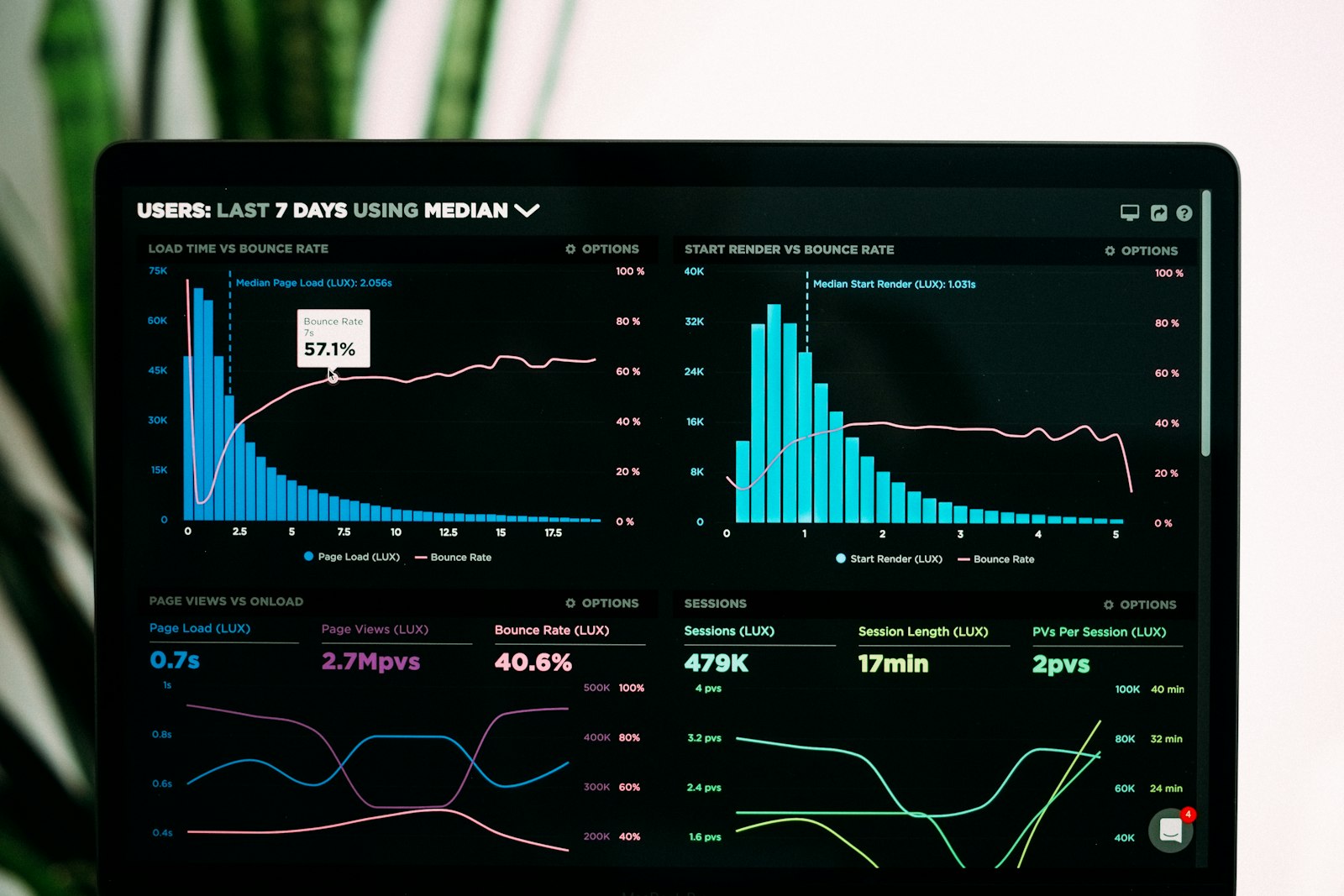
In December 2025, Ahrefs published the update everyone in SEO had been quietly dreading. Across the queries they tracked, the presence of an AI Overview now correlated with a 58% lower average click-through rate for the top-ranking page. Pew Research's controlled study of 68,000 queries had already pegged it at a 46.7% relative click decline. Seer Interactive's September 2025 cohort was harsher still: a 61% CTR drop, from 1.76% all the way down to 0.61%. And in the most quietly devastating data point of all, Seer found that queries without AI Overviews had lost 41% of their year-over-year CTR anyway — the bleed-out was no longer contained to AIO impressions.
If you run an AI content business — a faceless YouTube channel, a programmatic blog, an indie SaaS pulling traffic from organic search — that is the new floor you are building on. Organic traffic did not "just shift." It compressed, bifurcated, and got re-priced. The good news: most of that compression hit lazy content. The pages that survived 2025 are now disproportionately profitable. And a brand-new playbook — SEO plus GEO plus brand-mention engineering — is showing up in revenue dashboards for the operators who moved fast.
This is the honest 2026 state-of-the-stack for AI content creators. What still works, what is dead, and what the new traffic equation looks like in May 2026.
What Actually Happened to SEO in 2025–2026
The collapse was not a single event. It was a 14-month compounding sequence.
March 2024 — Google's Helpful Content Update folds into core ranking. Stated goal: reduce unoriginal content in results by 40%. Actual result, per Google's own post-mortem: 45% reduction. Forty-five percent of sites in the bottom quality decile lost traffic overnight.
May 2024 — AI Overviews launch in U.S. search, initially on ~7% of queries.
Q1 2025 — AIO coverage expands. Pew Research's March 2025 study finds that searches displaying an AI Overview convert to clicks just 8% of the time, versus 15% for traditional results. Position-1 CTR drops 34.5% when an AIO is present (Ahrefs, 300,000-keyword study).
May 2025 — Google's "scaled content abuse" policy explicitly names "using generative AI tools to create many pages without adding value for users" as a spam violation. The penalty wave starts.
September 2025 — Seer Interactive's 3,119-term study posts the now-famous 61% CTR collapse number. Paid CTR also drops 68% on AIO queries.
Q1 2026 — AI Overviews appear on roughly 50% of all U.S. searches, up 58% from 2025 levels (Stackmatix). Queries without AIO have still lost 41% YoY CTR.
The arithmetic is brutal: a blog that ranked #1 for a 10,000-search/month keyword used to net ~3,000 clicks. In the AIO era, that same #1 nets closer to 600–800. To replace the missing 2,200 clicks, you now have to either (a) be cited inside the AIO — which earns 35% more clicks than non-cited #1 pages, per Seer — or (b) get cited inside a ChatGPT, Perplexity, or Claude answer.
This is where the new stack starts.
The New Traffic Stack: SEO + GEO + Brand-Mention Engineering
The 2024 playbook had one column: rank in Google. The 2026 playbook has three columns, and your revenue is the product of all three.
Column 1: Classic SEO still feeds the funnel. AI engines crawl the same indexed web. Crawlability, page speed, internal linking, and E-E-A-T signals remain the foundation everything else stands on. Even Perplexity, the most "post-Google" of the answer engines, sources roughly 80% of citations from pages already indexed and ranked in classical search.
Column 2: Generative Engine Optimization (GEO) is the discipline of getting your page cited inside AI-generated answers. If "Rank 1" was the goal of 2024, "Citation Share" is the goal of 2026 — the percentage of relevant AI responses that mention your brand as a source.
Column 3: Brand-mention engineering is the meta-game. LLMs build internal authority signals by tracking which brands get name-checked alongside other trusted entities across the open web. Co-occurrence becomes the new backlink. A founder quoted on three industry podcasts, two newsletters, and one Reddit AMA in the same quarter gets a measurable lift in unprompted ChatGPT mentions four to six weeks later.
You do not pick one column. All three feed each other. A page that ranks (Col 1) is more likely to be cited (Col 2), and a brand that gets cited is more likely to be mentioned unprompted in long-tail conversations (Col 3), which then sends referral traffic back to pages that rank further.
The teams winning in 2026 are running this as one integrated pipeline, not three siloed projects.
llms.txt: The Honest Picture
Half the SEO blogs you read in 2025 told you that shipping an llms.txt file at your root domain was the new mandatory step. The 2026 reality is messier.
The format itself is now well adopted by publishers: SE Ranking's 300,000-domain study (Q1 2026) found 10.13% of domains now ship an llms.txt — meaningful for a 15-month-old standard. Stripe, Vercel, Cloudflare, Anthropic, Coinbase, Pinecone, Cursor, Hugging Face, and Perplexity all ship one.
But here is the part vendors do not lead with: as of Q1 2026, no major AI company — OpenAI, Google, Anthropic, Meta, or Mistral — has publicly committed to reading or acting on llms.txt in production. One independent monitor of 500M+ AI bot visits over 90 days found only 408 requests that directly targeted an llms.txt file. It is, today, a community convention with no W3C or IETF backing.
So should you ship one anyway? Yes, but for the right reasons:
- Developer-facing AI tools — Cursor, Continue, Aider, the major RAG frameworks — do read it. If your product has a developer audience or your docs serve as training context for coding assistants, llms.txt is already paying for itself.
- It is a 24-hour effort for most sites and has zero downside.
- When OpenAI or Anthropic do eventually adopt it (and the directional signal is they will), you want to already be in the corpus.
What to put in it: a flat list of your canonical URLs grouped by topic, each with a one-sentence summary. Lead with your highest-quality, most-citable pages — the data-rich, evidence-backed ones, not your homepage. Keep it under 50KB.
What llms.txt is not: a substitute for schema, structured data, or actually being indexed by Bing (the prerequisite for ChatGPT Search citations) and Brave (the prerequisite for Claude's web tier).
Schema and Entity-First Content: The Real GEO Foundation
If llms.txt is the marketing layer, schema is the engineering layer — and the engineering layer is where citations actually come from.
The data on this is now striking. Industry studies on knowledge-graph-grounded LLMs report factual accuracy on retrieval-augmented queries jumping from roughly 16% to over 50% when structured data is part of the retrieval layer. AI engines lean on schema during retrieval to extract authors, dates, prices, locations, and entity relationships with confidence, rather than inferring them from prose and getting them wrong.
The 2026 schema stack for an AI-content site:
Organization— name, logo, contact info, founder,sameAslinks to every social and review profile. This is how LLMs disambiguate your brand from competitors with similar names.Personschema for every author, withsameAsto LinkedIn, GitHub, X, and any speaking-engagement page. Cited authors compound into cited brands.ArticlewithdatePublished,dateModified, and a realauthorreference (not a string).FAQPagewith one question per<h3>. AIO and ChatGPT both lift these almost verbatim.HowToorDatasetwhen applicable —Datasetschema in particular gets pulled into Perplexity citations at a rate well above average.ProductwithaggregateRatingfor any tools or SaaS pages.
Beyond schema, the language of the page itself has to be entity-rich. Name the people. Name the products. Name the dates and the numbers and the cities. LLMs summarize generic prose into nothing; they preserve specific entities. A sentence like "the founder said their team grew quickly" gets discarded. "Sarah Liang said Versely's team grew from 4 to 32 engineers between January 2025 and March 2026" gets quoted.
The principle is sometimes called Authority Co-occurrence: if your brand is consistently mentioned alongside other trusted entities in your niche — on your own site, on partner sites, in podcast transcripts, in newsletters — AI systems learn to trust you by association.
5 SEO Tactics That Still Work in 2026
After 14 months of carnage, here is what is still printing traffic in May 2026.
1. Long-form, evidence-backed authority content. Pages with original data, primary research, or proprietary benchmarks now out-earn pages without them by an order of magnitude. Ahrefs' 2025 study of 600,000 URLs found no correlation between AI-generated text and lower rankings on its own — penalties land on thinness and lack of originality, not on the existence of AI in the pipeline. A 2,500-word post anchored on a fresh dataset still ranks, still gets cited in AIO, and still gets summarized into ChatGPT answers.
2. Comparison, calculator, and tool pages. Real utilities that compute a real answer. Wise's 8.5M currency-converter URLs still pull 60M+ visits a month in 2026 because the data is real-time and the page is the answer. AIO summaries cannot replicate them; they have to link.
3. Local + vertical long-tail. "AI video generator for dentists in Austin" still has organic clicks waiting because AIOs do not consistently cover hyper-specific intersections. The cost-per-page of programmatic SEO has stayed flat while the AIO threat has hollowed out the head terms — so the long tail is now disproportionately profitable per URL.
4. Video-bearing pages. A page with an embedded, transcribed video is now systematically harder to displace than a text-only page. AIO answers cannot easily replicate a 30-second demo. ChatGPT and Perplexity citations rank video-bearing pages with in-DOM transcripts higher. Dwell time on video-bearing pages runs ~2.4x text-only equivalents, and dwell time still matters in 2026.
5. Citation-bait content. The most counterintuitive shift. Content explicitly designed to be quoted by an AI — a 60-90 word self-contained TL;DR at the top, a clearly-labeled comparison table, a numbered list with one fact per item — now drives more downstream traffic than the page itself would, because the AI mention often produces an unprompted brand search that lands on a different page (your homepage, your pricing) with a much higher conversion rate. ChatGPT-referred traffic converts at 15.9% versus Google organic's 1.76% (Similarweb, 2026 cohort).
5 Tactics That Died With AI Overviews
The other side of the ledger. If your content calendar still leans on any of these, audit it this quarter.
1. Thin "best [keyword] in [year]" listicles. The single most-killed format of 2025. AIO summarizes them in one paragraph and links to the three brands the reader already heard of. Every other listicle on the page is invisible.
2. AI-spun "ultimate guides" with no original data. A 4,000-word post that summarizes what's already on the web is exactly what an AI Overview was built to replace. The May 2025 scaled-content-abuse policy update made these actively penalty-bait.
3. Exact-match keyword stuffing. Modern engines (and the LLMs that read them) treat repeated exact-match phrases as a low-quality signal, not a relevance signal. Topic depth and entity coverage replaced keyword density years ago; AIO accelerated the trend.
4. Programmatic SEO without a proprietary data layer. Spinning 5,000 thin pages from a CSV and a GPT wrapper is the textbook "scaled content abuse" pattern. The pSEO operators still winning in 2026 — Zapier, Wise, G2 — all run on real, proprietary data per row. The lazy version got de-indexed.
5. Optimizing for SERP screenshots instead of answers. The teams that spent 2024 obsessing over featured-snippet position 0 watched that surface get absorbed into AIO. The 2026 equivalent is optimizing for citation share — a question you can only answer by running your target queries through ChatGPT, Claude, Perplexity, and Gemini weekly and documenting which sources actually appear.
The Versely Angle: SEO + GEO as One Pipeline
The honest tension in 2026 is this. You need to publish more, in more formats, with higher per-page quality, while ranking in classical search and getting cited in three different AI engines and engineering brand mentions across the open web. Doing that with a 3-person content team and a 2024-era stack does not arithmetically work.
Versely was built for the version of this problem that exists in 2026, not the one that existed in 2022. The core idea: text alone cannot defend a SERP slot anymore, so every page on a modern site should ship with native multimedia — and that multimedia should be generated by the same content engine that writes the post.
A typical Versely-powered SEO workflow in May 2026:
- Topic + entity research — identify the cluster, name the entities, structure the schema before a word is written.
- Long-form article with citation-bait TL;DR, FAQ schema, and entity-rich body copy.
- Hero image via Versely's text-to-image generator using Flux Pro Ultra or Imagen 4 — branded, on-style, and CDN-served.
- Embedded explainer video via the AI video generator, with transcript in the DOM so the page is indexable as both video and text.
- Short-form repurposes for YouTube Shorts, TikTok, and Reels through the UGC video generator — these become the brand-mention layer outside your own domain, fueling the unprompted-search loop that drives ChatGPT citations.
The full system view is laid out in our AI content creation 2026 playbook, and the programmatic angle is detailed in Programmatic SEO with AI.
The single biggest unlock for SEO teams adopting Versely has been the collapse of the per-page production cost for native video — from $200+ in 2024 to under $1 in compute in 2026. At that price point, every blog post on the site can ship with a video, every video gets a transcript, and every transcript becomes a second indexable surface. That is the only known way to make a programmatic or editorial page literally un-summarizable by an AI Overview.
FAQ: SEO in 2026 for AI Content Creators
Q: Is traditional SEO dead in 2026? No, but it has been severely re-priced. Classical Google rankings still drive ~60-70% of high-intent traffic for most niches, and they remain the foundation AI engines crawl. What's dead is the single-channel strategy — relying on Google clicks alone. The 2026 stack is SEO + GEO + brand mentions running as one pipeline, with citation share tracked weekly alongside keyword rankings.
Q: Do I need to ship an llms.txt file? Yes, but with realistic expectations. As of Q1 2026, no major AI company has publicly confirmed reading it in production, and only 408 of 500M+ tracked AI bot requests targeted it directly. However, developer-facing AI tools (Cursor, Aider, Continue, RAG frameworks) do read it, it's a 24-hour project, and you want to be in the corpus when OpenAI or Anthropic do adopt it. Ship one. Don't make it your headline strategy.
Q: How do I get cited by ChatGPT, Perplexity, and Claude?
Three preconditions and three tactics. Preconditions: submit your sitemap to Bing Webmaster Tools (powers ChatGPT Search), verify with Brave Webmaster Tools (powers Claude's web tier), and ship a complete schema stack. Tactics: lead every key page with a 60-90 word self-contained TL;DR (LLMs lift these wholesale), use entity-rich language with named people, products, dates and numbers, and maintain a visible last_updated timestamp — Perplexity in particular weights recency hard.
Q: Will AI-generated content get me penalized by Google? Not on its own. The Ahrefs 2025 study of 600,000 URLs found no correlation between AI-generated text and lower rankings. Penalties land on scale plus thinness — the May 2025 spam policy explicitly targets "using generative AI tools to create many pages without adding value for users." If every page you ship has original data, real entities, a unique value-add per URL, and passes a programmatic QA check, AI in the pipeline is fine.
Q: What's the single most important 2026 SEO metric to track? Citation share — the percentage of your target queries in ChatGPT, Claude, Perplexity, and Gemini that name your brand as a source. Run a fixed set of 50-100 target prompts through each engine weekly. Document mentions. This is currently a manual process, but it reveals ground truth in a way that keyword rankings no longer do. Pair it with classical rank tracking, not as a replacement.
Closing: The Window Is Open, But Not For Long
The pattern in every major SEO transition — mobile-first in 2016, BERT in 2019, Helpful Content in 2023 — is the same. Six to eighteen months of carnage, then a new equilibrium where the operators who moved first compound their lead for years.
2026 is the same shape. The teams that built a GEO discipline alongside their classical SEO in late 2025 are already capturing disproportionate citation share. The teams that added native video to every page in early 2026 are seeing dwell times their text-only competitors cannot match. The teams that wired schema, entities, and brand-mention engineering into one pipeline are watching their organic traffic recover and then exceed pre-AIO levels — not from more pages, but from better ones.
If you are an AI content creator reading this in May 2026, the equation is no longer abstract. The 61% CTR collapse is real. The 14.2% AIO-cited conversion rate is also real. Which side of that ledger you end up on over the next two quarters depends on whether you treat 2026 as the year SEO died, or the year it grew up.
Versely was built for the latter view. If you want to ship long-form content, AI-generated hero images, embedded explainer videos, and short-form repurposes from a single workflow — and have every artifact instrumented for SEO + GEO from day one — start a free trial or talk to our team. The window is open for one more cycle. After that, the cost of catching up doubles.
Sources
- Ahrefs, "Update: AI Overviews Reduce Clicks by 58%" (December 2025) —
ahrefs.com/blog/ai-overviews-reduce-clicks-update/ - Seer Interactive, "AIO Impact on Google CTR: September 2025 Update" —
seerinteractive.com/insights/aio-impact-on-google-ctr-september-2025-update - SE Ranking, 300,000-domain llms.txt adoption study (Q1 2026), summarized at
codersera.com/blog/llms-txt-complete-guide-2026/ - Pew Research Center, AI Overviews controlled study, 68,000 queries (March 2025)
- Stackmatix, "Google AI Overview SEO Impact: 2026 Data & Statistics"