

AI Audio
AI Sound Design for Video Creators: Replace Your SFX Library in 2026
How video editors are replacing Epidemic Sound and Artlist with AI sound effects models in 2026 — ElevenLabs SFX v2, AudioCraft, Stable Audio compared, full workflow, prompts, and the costs.
A mid-tier YouTube channel doing two long-form videos and four shorts a month spends roughly $180 a year on Epidemic Sound and another $200 on Artlist for music and SFX combined. That is a $400 line item for what is, increasingly, a commodity input. In 2026, a sound effect is a prompt. The library subscription is a sunk cost most editors have not yet noticed they no longer need.
This post is the honest accounting: what AI sound effects can already replace in your edit, what still needs a library, how the workflow actually looks from script to DAW, and what it costs per project once you stop paying the monthly tax.

Why creators are killing their SFX library subscriptions
Stock SFX libraries solved a real problem in 2010: most editors did not have time to record a door slam, so they paid a flat fee to dig through 90,000 pre-recorded door slams instead. That tradeoff held for a decade. It started cracking in 2024 when ElevenLabs shipped its first text-to-SFX model, and it broke in 2025 when ElevenLabs Sound Effects v2, Stable Audio 2.5, and Meta's AudioCraft updates all crossed the "indistinguishable in a video mix" threshold.
According to ElevenLabs' published specs, Sound Effects v2 now generates up to 30 seconds at 48 kHz with seamless looping — broadcast-grade, included on every paid tier, with full commercial rights starting at the $5/month Starter plan. That is a fundamental pricing dislocation. Epidemic Sound's basic plan is $15/month, Artlist Social is around $9.99/month billed annually, and Artlist Max bundles AI tools at $39.99/month, while ElevenLabs gives you the same 48 kHz SFX output as part of a voice plan you probably already need for narration.
The three reasons creators are cancelling library subs in 2026:
- The library doesn't have your sound. "Rain on tin roof with distant thunder rolling east, low rumble underneath, no birds" is not a search query a stock library can answer. It is a prompt.
- Royalty-free is still a queue. Library workflows mean searching, previewing, downloading, trimming, fading, often layering three clips to get one usable sound. AI gives you a render at the exact duration you need.
- Cost compounds. Most channels run multiple subscriptions — music, SFX, footage, voice. AI consolidates two of those into one per-generation cost.
According to Music Business Worldwide, even Artlist itself integrated Google's Lyria 3 Pro AI music model in 2025, tacitly admitting that the library-only model is no longer competitive on its own. When your library platform is racing to add AI generation, the library is no longer the moat.
The three AI SFX models you should know
There are dozens of AI audio products on the market in 2026. For video creators, three matter: one commercial leader, one open-source workhorse, and one that lives in between.
ElevenLabs Sound Effects v2
The current commercial leader for video work. Strengths:
- Up to 30-second generations at 48 kHz, with seamless loop support for ambient beds.
- 38 built-in categories (impacts, braams, foley, ambience, devices, animals, weather, and so on) plus open-ended prompt generation.
- Integrated into Studio 3.0, so SFX, voiceover, and music can be assembled on a single timeline.
- Commercial rights from $5/month, included on the Creator plan ($22/month, ~100 minutes of voice per month).
- Independent reviewers including Curious Refuge's 2026 sound effects roundup note ElevenLabs' "spatial depth and 48 kHz resolution" as the closest to professional studio quality.
Weakness: 30-second cap per render is shorter than Stable Audio's 90 seconds, so very long atmospheric beds need stitching or looping.
Meta AudioCraft (AudioGen + MusicGen)
The open-source default. Free, MIT-licensed, runs on a single consumer GPU.
- AudioGen handles SFX, MusicGen handles music, and the 2026 AudioCraft 2 release narrowed the quality gap with commercial models significantly.
- Output is 32 kHz, lower than ElevenLabs' 48 kHz, but acceptable for social-format video where compression eats the high end anyway.
- No vendor lock-in. You can fine-tune on your own SFX library if you have one.
- Best for teams that already have GPU infrastructure or want to bake SFX generation into their own pipeline.
Weakness: prompt adherence is looser than commercial models, and there is no Studio-style UI — you are working at the API or CLI level.
Stable Audio 2.5
The sound-design specialist.
- Generates up to 90 seconds (versus ElevenLabs' 30), making it the strongest pick for long ambient beds and tension drones.
- Native audio inpainting: select a section of a generated clip, repaint it with a new prompt.
- Stable Audio Open is the free MIT-licensed sibling, but it tops out at 47 seconds and the quality is noticeably below the commercial 2.5 model.
- Excels at the abstract end: sub-bass drones, sci-fi atmospheres, hybrid music-SFX transitions.
Weakness: weaker on natural foley (footsteps, cloth, glass) and human-vocal sounds versus ElevenLabs.
The practical answer for most video creators: ElevenLabs for the bulk of your foley and ambience, Stable Audio when you need long atmospheres or design textures, AudioCraft if you have technical staff and a self-hosting reason.
The full workflow: script to DAW
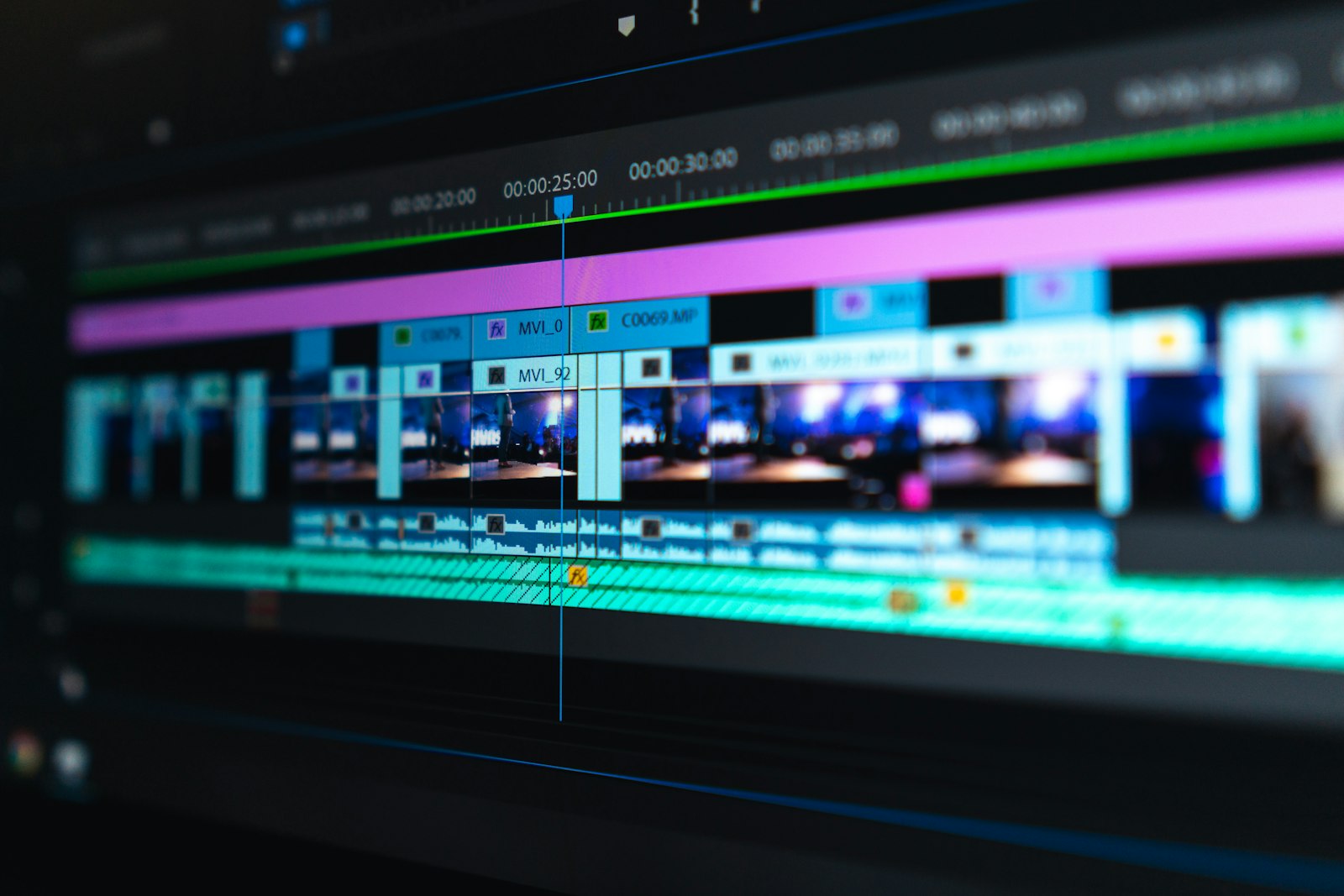
The "old" SFX workflow was: edit picture, drop the rough cut into a separate tab, search a library, drag in candidates, conform timing. The new workflow flips the order. SFX get specified during edit, generated against picture, then dropped in.
Step 1 — Build a SFX list from the script or rough cut. Watch through with a notepad. Every door, footstep, vehicle, weather element, transition, screen UI, ambient bed gets a one-line description and a target duration. For a 6-minute YouTube video this is usually 15-30 cues. For a 60-second short, 5-10.
Step 2 — Prompt-generate against the list. For each cue, write a 4-part prompt (source + environment + duration/dynamics + reference adjective — covered in detail below). Generate 2-3 takes per cue at the target duration. Reject and re-prompt the failures. Average time per cue: under a minute.
Step 3 — Import to DAW or NLE. Pull the approved takes into Premiere, Resolve, Final Cut, or a DAW. Because each clip was generated at the exact duration you asked for, the trimming step that used to dominate library work disappears. Level-match with a quick gain ride, EQ if needed, done.
Step 4 — Layer and ambient bed. AI generations often feel cleaner than library hits because they lack the "I've heard this in seven other videos" recognition. The fix is the same as for libraries: layer two complementary takes for impacts, run an ambient bed at -22 LUFS underneath, sidechain to dialogue.
Step 5 — Final mix. Master to platform spec (-14 LUFS for YouTube, -16 LUFS for Spotify-distributed podcast, -23 LUFS for broadcast). The SFX side is no different than mixing library sounds.
The whole loop, end to end, for a 6-minute video runs about 45 minutes including generation time. That is roughly half of what an equivalent library pass takes once you account for searching and trimming.
A prompt template that actually works
The four-slot structure for SFX prompting, after a few hundred generations across all three models:
Source + Acoustic environment + Duration/dynamics + Reference adjective
Worked examples:
- "Rain on a corrugated tin roof, indoor perspective, 25-second steady downpour with distant rolling thunder underneath, cinematic and warm." (ElevenLabs SFX v2, 25 s)
- "Footsteps on wet pavement, single walker, medium pace, 8 seconds, urban night ambience faintly behind, gritty and atmospheric." (ElevenLabs SFX v2, 8 s)
- "Deep sub-bass tension drone, large concrete room reverb, 60-second slow swell, ominous and minimal." (Stable Audio 2.5, 60 s)
- "Crowded morning cafe, gentle chatter, espresso machine in the distance, 30 seconds of consistent ambience, warm and busy without peaks." (ElevenLabs SFX v2, 30 s, looped)
- "Sword unsheathing from leather scabbard, single quick draw, 1.2 seconds, dry studio acoustic, metallic and sharp." (ElevenLabs SFX v2, 2 s with trim)
What to skip in prompts: brand names ("Glock 19 firing" gets you "a gun"), tempo BPM (SFX is not music), and emotional adjectives without acoustic grounding ("scary" without "low-frequency rumble" returns generic results).
Cost: per-project vs subscription
This is the part the library platforms do not want you running the numbers on. A 6-minute YouTube video using a mix of foley, ambience, and transitions typically needs 20-25 SFX cues.
| Source | Per-cue cost | 25-cue project cost | Annual cost (4 videos/month) |
|---|---|---|---|
| Epidemic Sound Personal | "Free" with subscription | $0 | $180 |
| Artlist Social | "Free" with subscription | $0 | $108 |
| ElevenLabs Creator ($22/mo) | "Free" within plan SFX quota | $0 | $264 (also covers TTS narration) |
| ElevenLabs metered SFX (Starter $5) | ~$0.05 | $1.25 | $60 + per-render |
| Stable Audio 2.5 (metered) | ~$0.06 | $1.50 | ~$72 at 4 projects/month |
| AudioCraft self-hosted | ~$0.01 GPU electricity | $0.25 | Effectively free |
The thing the table hides: ElevenLabs Creator also covers your TTS narration, your voice cloning, and music generation under one subscription. If you currently pay for Epidemic Sound and a separate AI voice tool and a separate music tool, consolidating onto one AI plan often nets to less than the library subscription alone.
For a creator running 4 long-form videos and 16 shorts a month, the realistic 2026 stack is: ElevenLabs Creator at $22/month for narration, foley, ambience, and short music cues, plus an occasional Stable Audio render for long atmospheric beds. Total: under $30/month for everything Epidemic Sound + Artlist used to cover, plus voice generation that the library platforms do not provide.

Where AI SFX still loses to a library
Honest list, because the people pretending AI replaces libraries 1:1 are wrong:
- Brand-specific real-world sounds. A 1967 Mustang engine, a specific firearm, a brand-name appliance bleep — AI generates "a car," "a gun," "a beep." For films and ads where audio recognition matters, you still need a library or a recordist.
- Speech-adjacent vocal sounds. Coughs, breath, laughs, sighs. ElevenLabs is closest, but most of these still land in uncanny valley. Record yourself or use a voice clone for non-verbal vocalizations.
- Multi-event sequences in one render. "Door opens, footsteps to trunk, trunk opens, bags placed, trunk closes, footsteps back" — the timing collapses. Generate in chunks and edit together.
- Sub-150ms transients. Single clicks, single taps. Library samples retain more detail than diffusion latents at these lengths.
- Specific named acoustic spaces. "The acoustic of Carnegie Hall," "the reverb of a London Underground tunnel" — approximated, not replicated.
- Foley with precise rhythm. Footsteps with a specific marching cadence to picture. AI will give you the texture; you still have to slip-edit the timing.
The sensible 2026 stance: most of a typical video can come from AI. The remaining 10-20% — the brand-specific, the speech-adjacent, the rhythm-critical — comes from a small recorded library or one-off licensing. You can build that micro-library from a single $30 Soundly Personal license or even just a folder of Freesound CC0 downloads. You don't need a $180/year subscription for the long tail.
Versely angle: SFX inside the content workflow
Most video tools treat audio as a downstream concern — generate the video first, hand off to a separate audio tool. Versely's content-creation chat threads SFX generation into the same workflow as the video itself.
Inside a single chat session you can prompt-generate B-roll with the AI B-roll generator, layer captions with auto caption generator, and call SFX cues against the cut in the same conversation. The model knows the scene context, so when you ask for "ambient SFX for the city skyline shot at 0:14," it generates audio that fits the visual energy rather than a generic stock match.
For UGC and product-ad work, the UGC video generator automatically places AI-generated SFX at detected motion peaks — a product drop, a hand reaching, a phone tap — so creators don't have to manually align cues. This is the part of the workflow that traditional library tools cannot solve: the cue placement, not just the cue itself.
For longer-form work that needs both score and SFX, pair it with the AI movie maker timeline, the AI music generators roundup for music selection, and the AI sound effects generation guide for the prompt engineering layer.
FAQ
Do I lose commercial rights if I use AI-generated SFX in monetized videos? On ElevenLabs, commercial rights are included from the $5/month Starter plan upward, covering monetized YouTube, paid ads, and audiobooks. Stable Audio commercial terms are per-plan — check the current pricing page. AudioCraft is MIT-licensed, so generations are yours to use commercially. Always verify the terms on the day you publish, since AI audio licensing is still evolving fast.
Will AI SFX make my videos sound generic if everyone is using the same models? Less than you'd think, because every prompt is different and every model adds stochasticity. The bigger risk is using the same library cues that every other YouTuber uses — those are far more recognizable than a one-off AI generation. Layering two complementary AI takes also adds variation that pure library work doesn't.
Can AI SFX match the 48 kHz / 24-bit quality I get from Pro Sound Effects or BOOM Library? ElevenLabs SFX v2 outputs at 48 kHz, which matches broadcast-grade libraries on sample rate. Bit depth is typically 16-bit on the output stem, below the 24-bit of premium libraries. For broadcast and theatrical mixes, layer AI generations with one or two 24-bit library hits to retain headroom. For YouTube, TikTok, and most ad work, 48 kHz / 16-bit is more than the platform encoding preserves anyway.
How long does generating SFX for a typical 60-second short take? About 8-12 minutes including prompt writing and a couple of re-rolls per cue. A 60-second short usually needs 5-10 SFX cues. Library work for the same project runs 20-30 minutes once you account for searching, previewing, and trimming.
What's the one workflow tip that makes the biggest quality difference? Generate at the exact target duration, not "close enough then trim." Most quality complaints about AI SFX come from people who generated a 15-second clip, trimmed to 4 seconds, and got the abrupt tail or pre-roll noise that always shows up at clip boundaries. Asking the model for 4.0 seconds gets you 4.0 seconds with proper onset and decay.
Stop paying rent on sounds
The shift in 2026 is not that AI replaces sound libraries entirely — it is that the subscription model for SFX no longer makes economic sense for most independent creators. You can keep a small recorded library for the brand-specific edge cases, generate the rest, and walk away from $400/year in renewals.
Try it on the next project. Cancel one subscription for one month, write your SFX list, prompt your way through it, and compare the result. If the audience cannot tell the difference — and they almost never can — the library platforms have lost the argument for that line of your budget.
Spin up a video and layer in AI SFX in one workflow inside Versely — chat-based content creation with sound, captions, and editing in a single thread.