

Workflows
How to Make an AI Product Launch Video (2026 Guide)
The exact AI workflow to ship a launch video in an afternoon: scene prompts, model picks per shot, voiceover, captions, and cuts for every platform.
A product launch video used to be the most expensive single asset in a launch — a $15,000-$40,000 line item with a 4-6 week lead time and a content lock that made last-minute pivots impossible. In 2026, you can ship a launch video the same week you finalize the product, regenerate any scene in 90 seconds, and have three platform-specific cuts live before lunch on launch day.
This is the rig. We'll walk through the exact workflow we use to launch products on Versely — same brief, same models, same six steps. Target: ship a 60-90 second launch video in 3-4 hours of focused work, $10-20 in compute, no agency.

Step 1: Define the brief
A launch video is not an explainer. It's a moment. The brief has to capture both what the product does and why this specific moment matters. Vague briefs produce videos that feel like templates.
Use this template:
PRODUCT: [name + one-line positioning]
LAUNCH MOMENT: [what's actually new — feature, repositioning, GA, etc.]
AUDIENCE: [the specific person who should care today]
BEFORE: [what they're doing today that this replaces]
AFTER: [what their day looks like after]
HERO MOMENT: [the single shot that defines the launch — be specific]
TONE: [confident-corporate / scrappy-founder / cinematic-premium / playful-consumer]
CTA: [the one action]
LAUNCH WINDOW: [the date and platforms — Product Hunt, X, LinkedIn, etc.]
Worked example for a fictional async standup tool:
PRODUCT: Loopkit — async standups that auto-summarize into a Slack digest.
LAUNCH MOMENT: GA launch with new AI summary mode.
AUDIENCE: Engineering managers at 20-200 person startups.
BEFORE: 30-minute Zoom standups everyone resents.
AFTER: 5-minute async video drops, AI digest waiting in Slack at 9 a.m.
HERO MOMENT: A manager opens Slack and sees the entire team's standup
  summarized as a 3-bullet digest.
TONE: confident-corporate with a wink.
CTA: Get early access at loopkit.com.
LAUNCH WINDOW: Product Hunt + X + LinkedIn, May 14.
Lock this brief before you generate a single frame. It's the tiebreaker for every prompt decision downstream.
Step 2: Script + storyboard
A launch video should run 60-90 seconds. Less than 60 and you can't build the moment. More than 90 and people scroll. The arc that ships:
- Cold open (0-5s): A visual shorthand for the pain. No words yet.
- Pain articulation (5-15s): Name what's broken in one sentence.
- Reveal (15-25s): The product enters. Logo or hero shot.
- Capability beats (25-55s): 2-3 specific, concrete moments.
- Stakes / vision (55-75s): Where this leads.
- CTA (75-90s): The action and how to take it.
Sample script for Loopkit:
"Your team's standup. 9 a.m. sharp. Eight people. Twelve minutes of crickets. Forty-three minutes of context-switching for everyone after. There's a better way to know what your team did yesterday. Loopkit replaces standup with 60-second async videos that summarize themselves. You open Slack at 9. The whole team's day is waiting in three bullets. No meetings. No notes. No yesterday's-news status updates. Loopkit is generally available today. Get early access at loopkit.com."
Now the shot list. One row per scene, with the model and the duration:
| # | Scene | Duration | Model |
|---|---|---|---|
| 1 | Empty Zoom grid, awkward silence | 5s | SORA 2 |
| 2 | Multiple people checking watches in tile view | 10s | VEO 3.1 |
| 3 | Loopkit logo reveal with motion graphic | 5s | Ideogram 3 still + animated |
| 4 | Phone recording a 30s video selfie | 10s | Kling 3.0 |
| 5 | Slack notification arriving with digest | 10s | Hailuo |
| 6 | Engineering manager smiling at laptop | 10s | SORA 2 |
| 7 | Cinematic team-collaboration montage | 15s | VEO 3.1 |
| 8 | Logo + CTA card | 10s | Ideogram 3 |
The shot list is your contract with future-you. Don't deviate during generation.
Step 3: Generate scenes
Now generate. Open the AI video generator and work scene by scene. The cardinal rule: pick the model per shot, not per project.
Cinematic hero shots: VEO 3.1 or SORA 2. They handle lighting, depth, and physics in a way that makes a launch video feel like an ad, not a demo.
Sample prompt for the cold open:
Wide overhead shot of a Zoom call grid with 8 tiles, all participants on
mute looking down or away, soft fluorescent office light, slight handheld
camera sway, muted color palette, 5 seconds, no text, no overlays.
Product moments (devices, screens, hands): Kling 3.0 or Hailuo. Both handle phones and laptops without the warping artifacts other models still produce in 2026.
Sample prompt for the Slack notification scene:
Close-up over-the-shoulder of a MacBook screen showing a Slack channel.
A new notification slides in from the bottom with a 3-bullet team summary.
Soft window light from camera-left, shallow depth of field, gentle scroll
motion, no other UI movement, 10 seconds.
People shots: SORA 2 for realism, Wan 2.7 if you want a stylized look. For talking-head energy without generating a face, jump to the UGC video generator and use a UGC actor template.
Stills you'll animate: Use Flux 1.2 Ultra or Midjourney v7 in text-to-image for any static frame, then add a slow Ken Burns push in your editor.
Logo / typography / CTA cards: Ideogram 3. It's the only model that consistently nails crisp on-screen text in 2026.
B-roll filler: Use the AI b-roll generator — feed it your script line by line, get a matched clip per beat. This is the single biggest time-saver in the workflow.
Run each prompt twice. Pick the better take. Don't run a prompt 10 times "until it's perfect" — you'll burn an hour and the second take is almost always the keeper.
Step 4: Voiceover + lip sync
Voice is what separates a launch video from a corporate template. Two options that ship:
Option A — Clone the founder's voice. Record 60 seconds of clean audio from your founder, run it through AI voice cloning using ElevenLabs v3. The cloned voice narrates the script. Cost: about $0.50 for a 90-second read. This is the right call if your founder will be the face of the brand for the next 12 months.
Option B — Premium synthetic. Use ElevenLabs v3 or Inworld TTS-2 with a curated voice. Pick something with a real accent and breath patterns. Avoid the default broadcaster voice — it screams template.
If you have a talking-head shot in the storyboard, run it through AI lipsync to match the generated face to your VO. Upload the video, drop in the audio, hit generate. Two minutes per shot.
VO direction to include in your TTS prompt:
Pace: confident, slightly under newscaster speed.
Energy: dialed in, not hyped.
Emphasis: punch "today", "Loopkit", and "early access".
Pauses: full beat after the cold open. Half-beat before the CTA.
Smile: a touch of warmth on the final line.
Step 5: Music, captions, thumbnail
Music. Generate a 90-second cue in Suno v5.5 or Lyria. Prompt: "Confident corporate underscore, light electronic percussion entering at 0:25, gentle string pad, building to a satisfying drop at 0:55, soft outro at 0:80, no vocals." Mix it at -18 LUFS so the VO sits clearly on top.
Captions. Burn them in. Use Inter or SF Pro at 60-72px, white with a 2px black stroke, max 4 words per line, with a quick pop animation per word. Sound-off viewing is the default on every platform now.
Thumbnail. Generate three options in the AI thumbnail generator. For a launch, the formula is: hero shot of the product (or founder face) + 3-5 word headline + a single bold accent color tied to your brand. A/B test all three for 24 hours and keep the winner.
Step 6: Final cut + publish
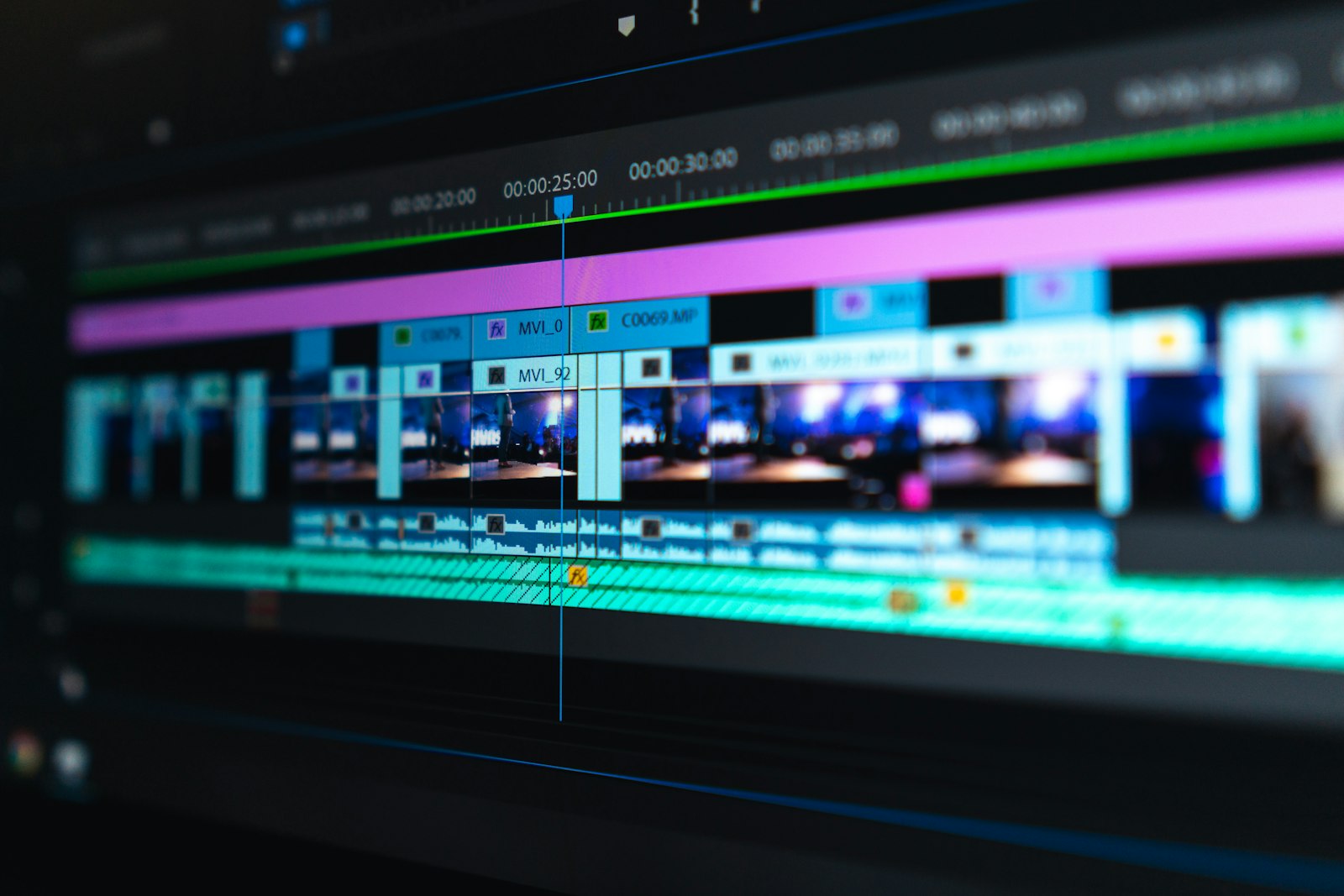
Stitch in your editor — we use the AI movie maker for fully agentic stitching, but Premiere or CapCut work fine. Cut on the beat. Every transition should land on a downbeat in the music, never on a sentence break.
Export four cuts:
- 16:9, 90s for YouTube, your landing page hero, and Product Hunt's video slot.
- 9:16, 30-45s for Reels, TikTok, and Shorts. Keep the cold open, the reveal, one capability beat, and the CTA.
- 1:1, 60s for LinkedIn and X feed video.
- 9:16, 15s for paid social. Hook + reveal + CTA only.
For the vertical cuts, re-frame each scene by 30%. Don't just letterbox the 16:9 — recompose so the focal point sits in the upper third where a thumb won't cover it.
Time check: brief (10 min) + script + shot list (20 min) + generation (90 min including regenerations) + voice + lipsync (20 min) + music + captions (20 min) + cuts + exports (40 min) = roughly 3.5 hours. Total spend: $10-20.
FAQ
How long should a product launch video be?
60-90 seconds for the master cut. 30-45 seconds for short-form. 15 seconds for paid social. Anything over 2 minutes is a product walkthrough, not a launch video, and the metrics will look completely different — treat them as separate assets.
Can I launch a product with only an AI-generated video in 2026?
Yes, and increasingly people do. The bar is whether the video communicates the launch moment clearly, not whether a human held the camera. Disclose AI generation if your jurisdiction requires it.
Which AI video model should I use for a product launch?
VEO 3.1 and SORA 2 for hero shots. Kling 3.0 and Hailuo for product and device moments. Ideogram 3 for any frame with text. The AI video generator lets you swap models scene by scene without leaving the canvas — which is the only practical workflow.
How much does an AI product launch video cost in 2026?
$10-25 in model compute for a 90-second video with 6-8 generated scenes. Compare to $15,000-$40,000 for an agency-produced launch video of equivalent quality. The economics are not subtle.
What's the biggest mistake people make with AI launch videos?
Generating before scripting. The model is not the bottleneck — clarity is. Lock your brief, write the script, and build the shot list before you generate a single frame. People who skip those steps end up with 40 beautiful clips and no story.
Ready to ship your launch? Open the AI movie maker, paste in your brief, and the agent will scaffold the storyboard, generate every scene, and hand you back an editable timeline. For a deeper look at which models to pick per scene, read the 2026 model roundup or the 60-second product demo guide.